

Just when marketers thought they had SEO figured out, along came generative engine optimization (GEO). Suddenly, there’s a whole new set of tools, metrics and strategies to learn, along with plenty of conflicting advice about how to get your brand noticed in AI-generated search results.
If you’re struggling to keep up, you’re in good company.
In our Brafton Labs GEO survey, we asked 142 marketers about their biggest concerns surrounding generative search. The most common answer? Not declining traffic, tight budgets or AI hallucinations. It was a lack of knowledge and skills. And this wasn’t just a concern for GEO beginners. Marketers with varying experience, roles and seniority expressed the same uncertainty.
So, how do you build your GEO skills when even the experts are still figuring things out? Let’s explore.
The GEO Knowledge Gap Is Bigger Than You Might Think
When we asked respondents about their biggest concerns regarding generative search, 35.9% mentioned a knowledge or skills gap. That made it the most frequently identified concern, ahead of measurement and attribution (18.3%), resource constraints (14.8%) and rapid change (14.1%).
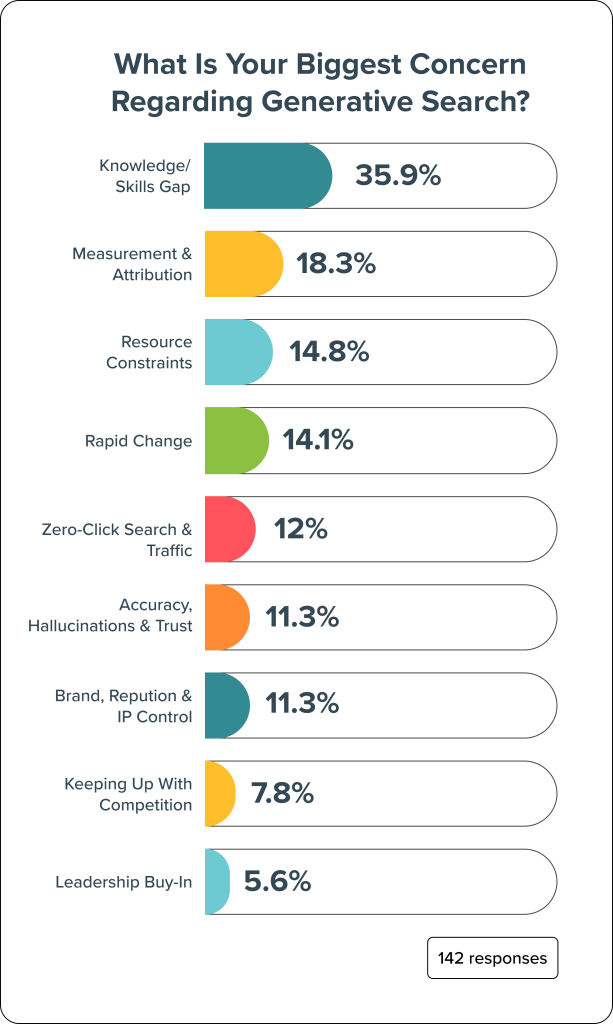
What’s interesting is how widespread this concern was. It appeared among marketers with different levels of GEO familiarity, across professional roles and seniority levels. In other words, knowing about GEO doesn’t necessarily mean knowing how to put it into practice.
Our survey also found that:
- 47.2% identified a lack of clear best practices as an implementation barrier.
- 37.3% cited limited internal expertise.
- 50% identified measurement challenges.
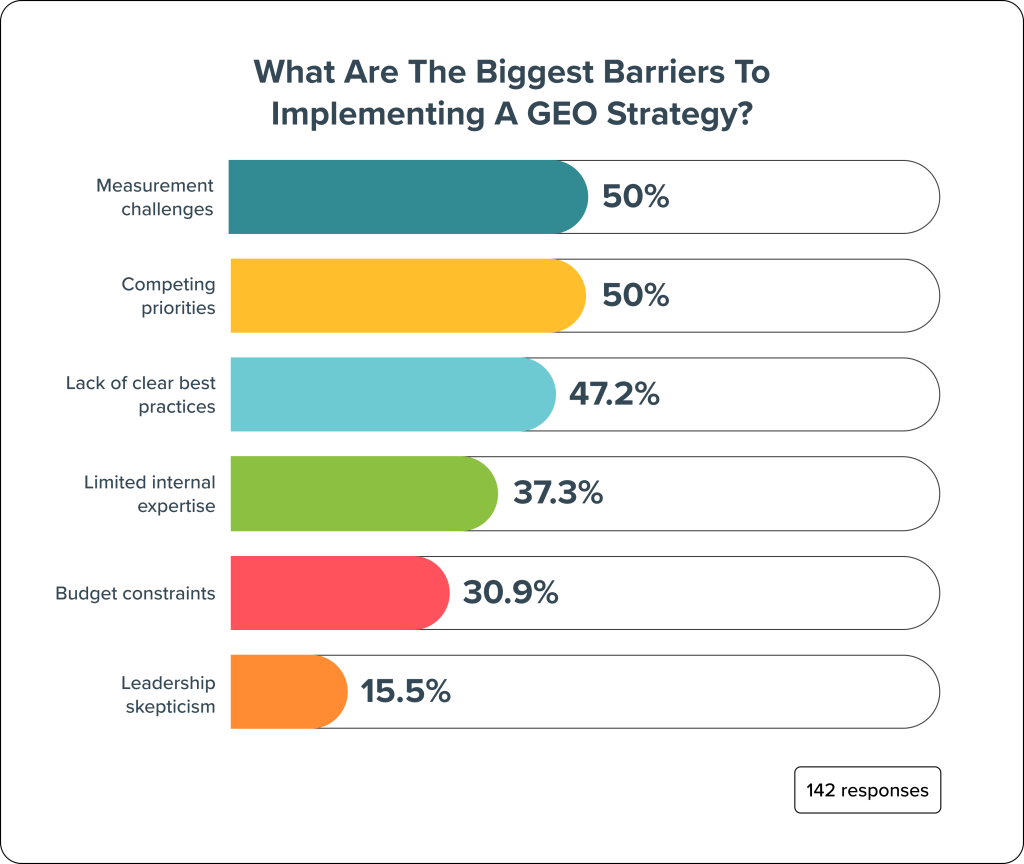
These findings help explain why building GEO expertise is difficult. Even motivated marketers don’t always have a clear path forward.
Why Is GEO So Difficult To Learn?
Established marketing disciplines have years of documented practices, benchmarks and relatively predictable ways to measure performance. GEO, however, is still developing. AI-powered search experiences are changing, platforms operate differently and marketers are still figuring out which tactics consistently influence visibility.
Then there’s the advice. Search for GEO best practices and you’ll find plenty of confident recommendations. Some are grounded in established SEO principles, while others rely on limited experiments or assumptions about how AI systems work. Figuring out which advice to trust isn’t always easy.
But marketers are keen to learn. Our survey found that 36.6% of respondents hadn’t attended GEO training yet but were interested in learning more. The interest is there, even if the path forward isn’t always clear.
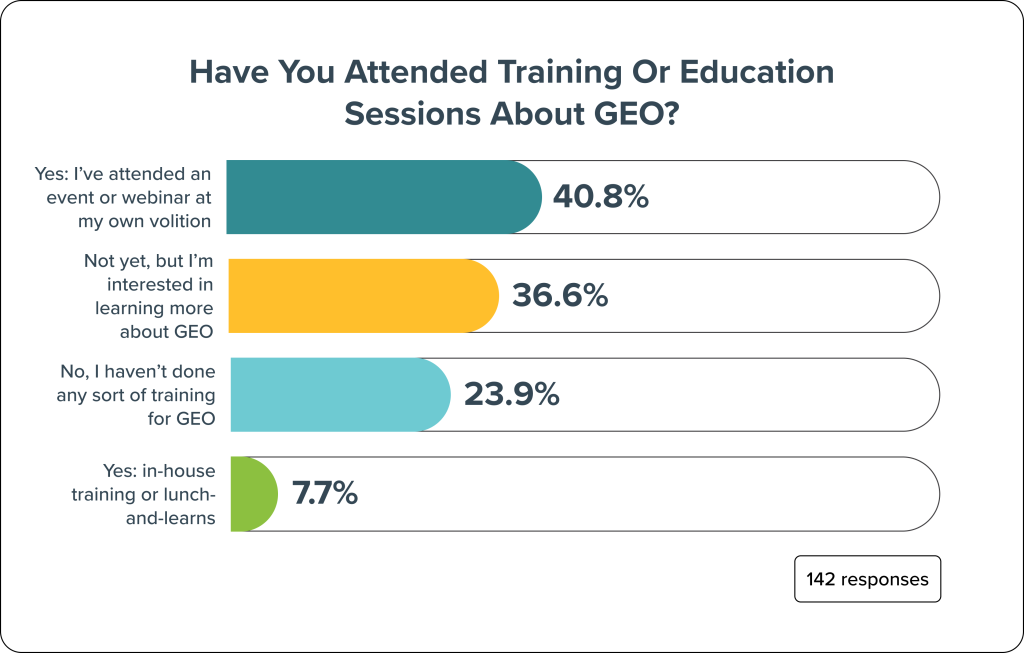
The good news? You don’t need to become an expert overnight. Start with what you already know and focus on building the skills that will make the biggest difference.
7 Ways Marketers Can Close the GEO Knowledge Gap
1. Start With the SEO Skills You Already Have
Before you sign up for five GEO certifications, consider how much of your SEO knowledge still applies. Google’s guidance on AI features and websites confirms that established SEO best practices remain relevant to AI Overviews and AI Mode.
That means familiar priorities still matter:
- Creating helpful, accurate content.
- Making pages accessible to search engines.
- Using clear headings and logical structures.
- Maintaining internal linking.
- Demonstrating expertise through credible sources and original insights.
Rather than treating GEO as a replacement for SEO, think of it as another area of search visibility to understand.
2. Build Your Learning Around Reliable Sources
With so much GEO advice circulating online, knowing where to learn is half the battle.
Start with official documentation from search platforms. Google’s Search Central resources explain how AI features relate to traditional search, while Bing Webmaster Tools provides information about AI citations and reporting.
Industry publications can help you follow developments, but consider whether recommendations come from official guidance, independent research or individual experiments. Before trying a new tactic, ask yourself: What’s the evidence? Does it apply to our target platforms? Can we test it?
You don’t need to dismiss emerging ideas. Just avoid treating every new theory as a universal rule.
3. Invest in Practical GEO Training
Reading about GEO is useful, but there’s a difference between understanding the terminology and knowing how to apply it. Look for webinars, workshops and resources that demonstrate real workflows, such as evaluating AI visibility, identifying content opportunities or interpreting metrics.
For example, Brafton’s free webinar, Winning Strategies for SEO, GEO & AI Visibility, explores ways to improve AI search visibility, strengthen authority and measure performance.

Training doesn’t need to involve a formal course, either. Internal lunch-and-learns, team demonstrations and discussions about recent developments can all help. The important part is turning information into practical knowledge.
4. Get Hands-On With AI Search Tools
One of the best ways to get more comfortable with AI search is to try it yourself. Think about the questions your customers might ask, then plug them into tools like ChatGPT, Google AI Mode or Perplexity.
See what comes up. Which brands get mentioned? What sources does AI pull from? Does your company make an appearance? And do you get different answers depending on the platform?
For example, if you work for a software company, you could test questions about choosing the right software or comparing different solutions. Of course, a few searches won’t tell you everything. AI responses can change, so don’t read too much into individual results. Instead, look for patterns and opportunities. You might discover questions your content isn’t answering, topics competitors are covering more effectively or gaps in how your brand shows up in AI search.
5. Learn How To Measure GEO Performance
Measuring GEO performance is another area where marketers are still finding their feet. With traditional SEO, we’re used to tracking rankings, clicks and conversions. But how do you measure success when AI mentions your brand without necessarily sending someone to your website?
There’s no single agreed-upon approach yet, but that doesn’t mean you’re flying blind.
Tools like Bing Webmaster Tools’ AI Performance reporting can help you understand how often your content is cited in supported AI experiences and which pages are being referenced. You can also track traffic coming from identifiable AI platforms through your analytics tools and keep an eye on branded search activity.
Just remember that these metrics tell different parts of the story. Being cited by AI doesn’t always lead to a click, and more mentions don’t necessarily mean more conversions. For now, focus on tracking what you can, understanding what the numbers actually mean and building a clearer picture of how your brand is performing in AI search.
6. Bring Different Teams Into the Conversation
Closing the GEO skills gap shouldn’t fall entirely on the SEO team.
Content marketers understand audience needs. SEO specialists bring technical expertise. Analytics teams help with measurement. Subject matter experts contribute the knowledge that makes content genuinely useful.
Bringing these perspectives together can help teams make better decisions. Consider creating a shared space to document experiments, exchange resources and discuss what you’re learning. That way, GEO knowledge becomes an organizational capability rather than something one enthusiastic employee has to maintain alone.
7. Run Small Experiments and Document What Happens
When best practices are still emerging, experimentation is an important learning tool, but that doesn’t mean overhauling your website every time someone publishes a new GEO theory. Choose a few existing pages that address important customer questions. Review their accuracy, structure and usefulness, then identify improvements worth testing.
You might add original expert insights, clarify common questions, update outdated information or improve page organization. Record what you changed, when you changed it and which outcomes you’re monitoring. AI-generated answers can vary, so avoid drawing conclusions from a single result. Over time, documented experiments can help your team identify promising patterns.
You Don’t Need To Know Everything About GEO
If our survey tells us anything, it’s that pretty much everyone is still figuring out GEO, even marketers who know their way around SEO. And that’s OK. You don’t need to become a GEO expert overnight or chase every new AI search trend.
Start with what you already know, try a few things out and share what you learn along the way. The more you experiment, the more confident you’ll become in figuring out what works for your brand.
And who knows? By the time someone finally writes the GEO rulebook, you might have a few tips of your own to add.
Curious how other marketers are navigating GEO? Download our free GEO survey report to explore the challenges, strategies and opportunities shaping the future of AI search.